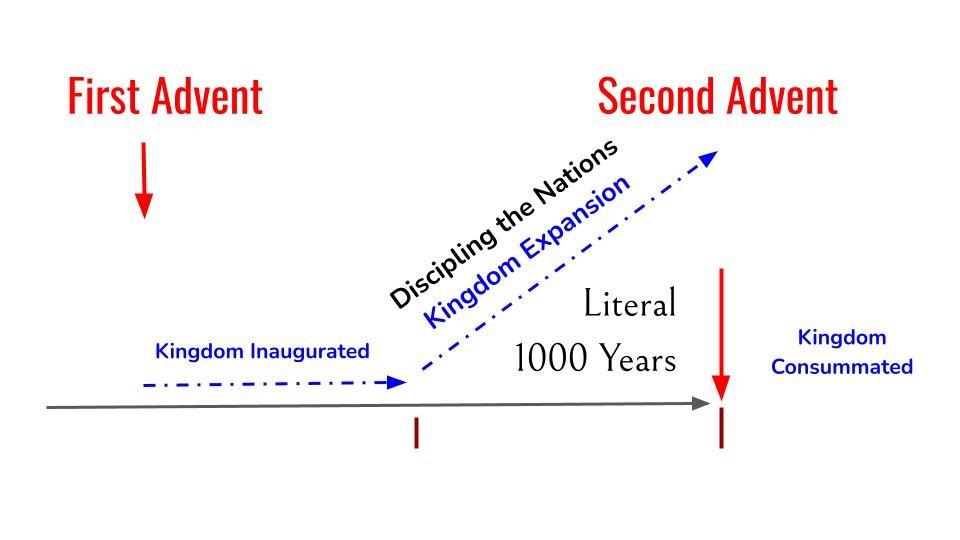
The term 'millennium', often entwined with eschatological strands of theology, refers to the prophesied thousand-year reign of Christ foretold in the Book of Revelation. The various millennial views explore diverse perspectives on the nature of this period, as well as its chronological place concerning the Second Coming of Christ and other end-times events.
Exploring Postmillennialism
The Era of Spiritual Prosperity
Postmillennialism projects a future where Christ's return succeeds an era marked by the Gospel's triumphant spread and the Church's advancement toward societal virtues such as righteousness, justice, and peace. This paradigm is not contingent on a literal thousand years but interprets the millennial period as extended spiritual prosperity.
The Present Kingdom of God
In Postmillennialism, the Kingdom of God is seen predominantly as a present reality, rather than a future physical domain. This view holds that the Kingdom grows progressively through gospel proclamation, gradually infusing the world's social and cultural institutions with Christian principles.
A Culmination of Worldwide Spiritual Establishment
A unique aspect of Postmillennialism is the belief that a worldwide conversion will occur prior to Jesus' return, leading to an extended time of peace. This growth is seen as qualitative, emphasizing the intrinsic value of the Kingdom's expansion.
Unpacking Amillennialism
A Symbolic Interpretation of the Millennium
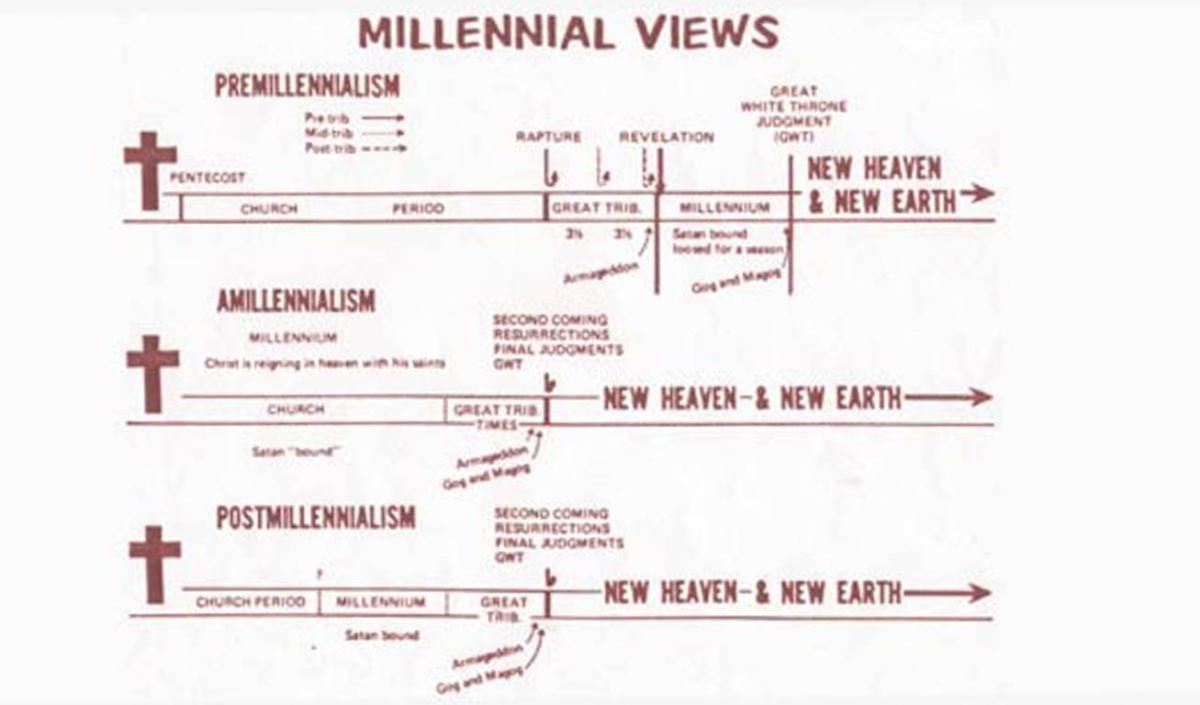
Amillennialists diverge from the Postmillennial notion of a millennium, rejecting a literal interpretation. They view the millennium as symbolic, stressing that the ultimate fulfillment of prophecy has been or will be realized through Jesus Christ and his new earth.
The Cyclical Nature of Revelation
This perspective sees the Book of Revelation as cyclical, interpreting the events therein as overarching patterns rather than pinpointing a chronological sequence of end-times events.
The Lack of a Literal Thousand-Year Reign
Amillennialists posit that there is no literal thousand-year reign of Christ on earth. For them, the end times culminate with the general resurrection and final judgment, leading into the eternal state of existence.
Dispensational Premillennialism Dissected
The Literal Kingdom and the Church's Role
Championing a literal interpretation of the Bible, Dispensational Premillennialists anticipate a clear distinction between Israel and the Church in God's salvation plan. They awaiting a millennial kingdom specifically fulfilled through ethnic Israel, separate from the Church's destiny.
The Timeline of the Tribulation

According to this view, the Church does not endure the tribulation but is raptured beforehand. The Second Coming of Christ, therefore, occurs in two phases: the rapture and the return with the Church to establish His kingdom on earth.
An Overview of Historical Premillennialism
The Church's Trial and Christ's Earthly Reign
Historical Premillennialists advocate for a physical millennial reign of Christ that follows a period of great tribulation, during which the Church remains present on earth. This position emphasizes the notion of an impending Second Coming that delivers hope, not from tribulation, but within it.
The Unity of the Return and the Kingdom's Duality
Contrary to Dispensationalism, Historical Premillennialists view the return of Christ as a singular event and conceive of the Kingdom of God as both a current spiritual reality and a future physical reign.
Conclusion: A Focus on Christ's Return
All millennial positions converge on the belief in Christ's physical, visible return, signaling the consummation of God's Kingdom and the definitive triumph over sin, evil, and death. Each viewpoint enriches the tapestry of Christian eschatology, offering varied lenses through which believers anticipate this climactic era.
The Intersection of Eschatology and Hospitality
When considering the transformative power of such millennial views, one might contemplate how these eschatological expectations could influence more worldly aspects of life, such as travel and the hospitality industry. While hotels cater to temporal needs, with comfort and service as their hallmark, the values and hopeful outlook of believers participating in these realms can subtly shape practices and interactions within them. A millennial perspective, whether it focuses on an imminent spiritual revival, a symbolically triumphant Church, or the awaiting of a future kingdom, can infuse the daily workings of travel and hospitality with a greater sense of purpose and anticipation for a larger, divine narrative.