Compiled by Derek Gentle
1. The Full Deity of Jesus Christ
Exploration of the evidence for Christ’s deity reveals attributes and actions uniquely indicative of God. The preexistence, eternality, and sovereignty in creation all point unequivocally to Jesus Christ's divine nature.
A. Preexistence
Witnessing Christ’s identity extending beyond the constraints of time and space, affirming His divine nature as present before creation.
B. Eternality
Understanding the concept that Jesus, having no beginning or end, shares the attribute of unchanging existence with God the Father.
C. Being Creator
Grasping the significance of Christ's role in creation, emphasizing the divine power and authority inherent to Him.
D. Forgiving Sins
Evaluating the authority exhibited by Christ in forgiving sins, a prerogative belonging solely to God.
E. Co-partner in Divine Glory

Reflecting on the shared glory between the Father and the Son—a glory unique to and inseparable from the Divine Being.
F. Receiving Worship
Understanding the acceptance of worship by Christ, an act reserved for deity and recognized as such by those who encountered Him.
G. Proclaiming His Divine Identity
Contemplating Christ’s assertion of oneness with the Father, boldly stating His divine essence amid His earthly ministry.
H. Called God by Others
Considering the titles and acknowledgment given to Christ by apostles, prophets, and even the Father Himself, affirming His deity.
2. The Genuine Humanity of Jesus Christ
Contrary to gods in disguise, the humanity of Jesus Christ comprised of an actual human body, genuine emotions, and an authentic human soul and spirit, truly embodies the full human experience without the impairment of sin.
A. He Took on an Actual Body
Demonstrating the tangible and experiential nature of Christ’s physical form, able to be seen and felt.
B. He Experienced Human Emotions
Acknowledging the emotive aspects of Christ’s humanity that drew Him near to human suffering and joy.
C. He Embodied a Human Soul/Spirit
Recognizing the introspective and spiritual depth possessed by Christ, completing the scope of His human nature.
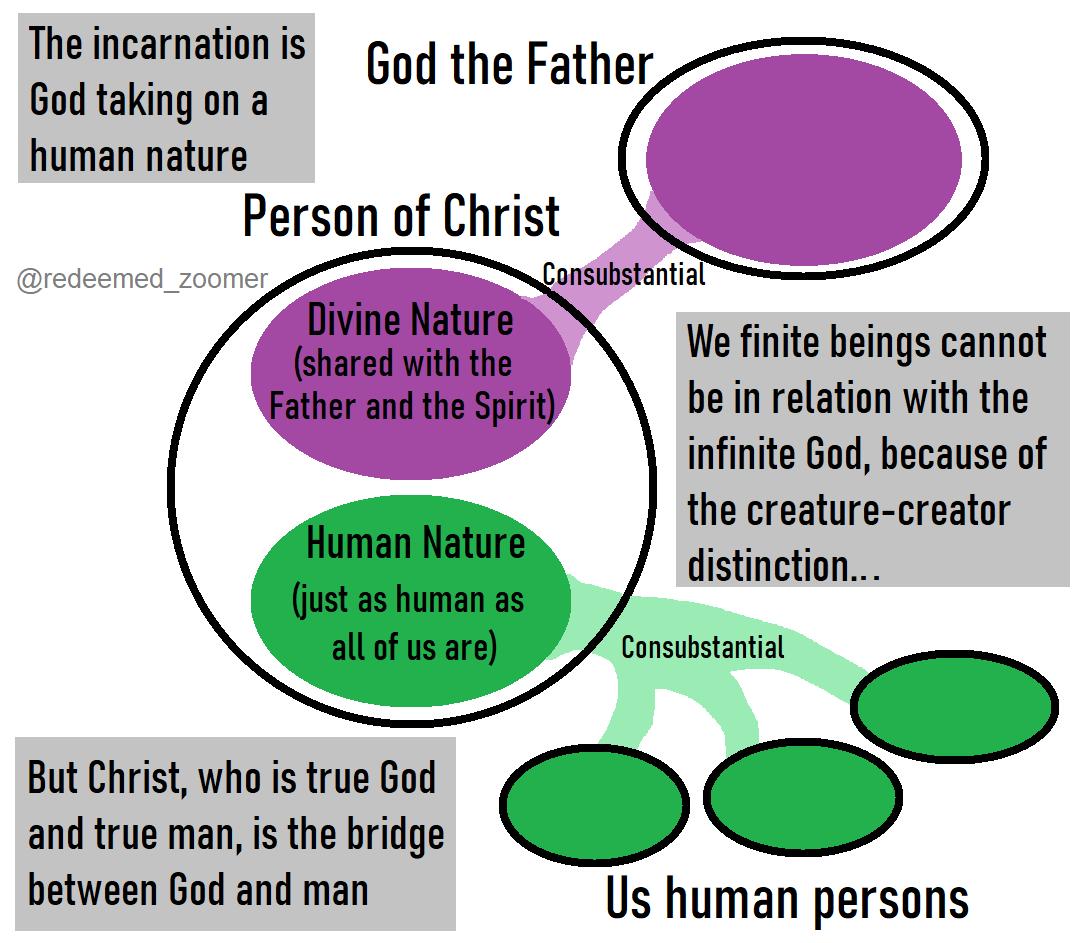
3. Two Natures in One Person
The union of divine and human natures within the singular persona of Christ forms the cornerstone of the Incarnation, a mystery embraced by the early Church as essential to faith.
4. Reasons for the Incarnation
Unpacking the multifaceted rationale behind the Incarnation—as a means to reveal God, provide an exemplar of righteousness, overcome temptation, offer sacrificial atonement, fulfill divine promises, defeat the devil, and establish the second Adam for the renewal of humanity.
5. The Means of the Incarnation: The Virgin Conception and Birth
Interpreting the Virgin Birth as an essential element of the Incarnation, safeguarding the sinlessness and reconciliatory mission of Christ, whilst uniting the divine and the mortal into a unique, restorative presence.
6. The Self-Emptying of Christ
Discussing the self-imposed limitation of divine glory, as Christ embraced servanthood and lived in dependent obedience to the Father, marking His earthly ministry with relatable authenticity and humility.