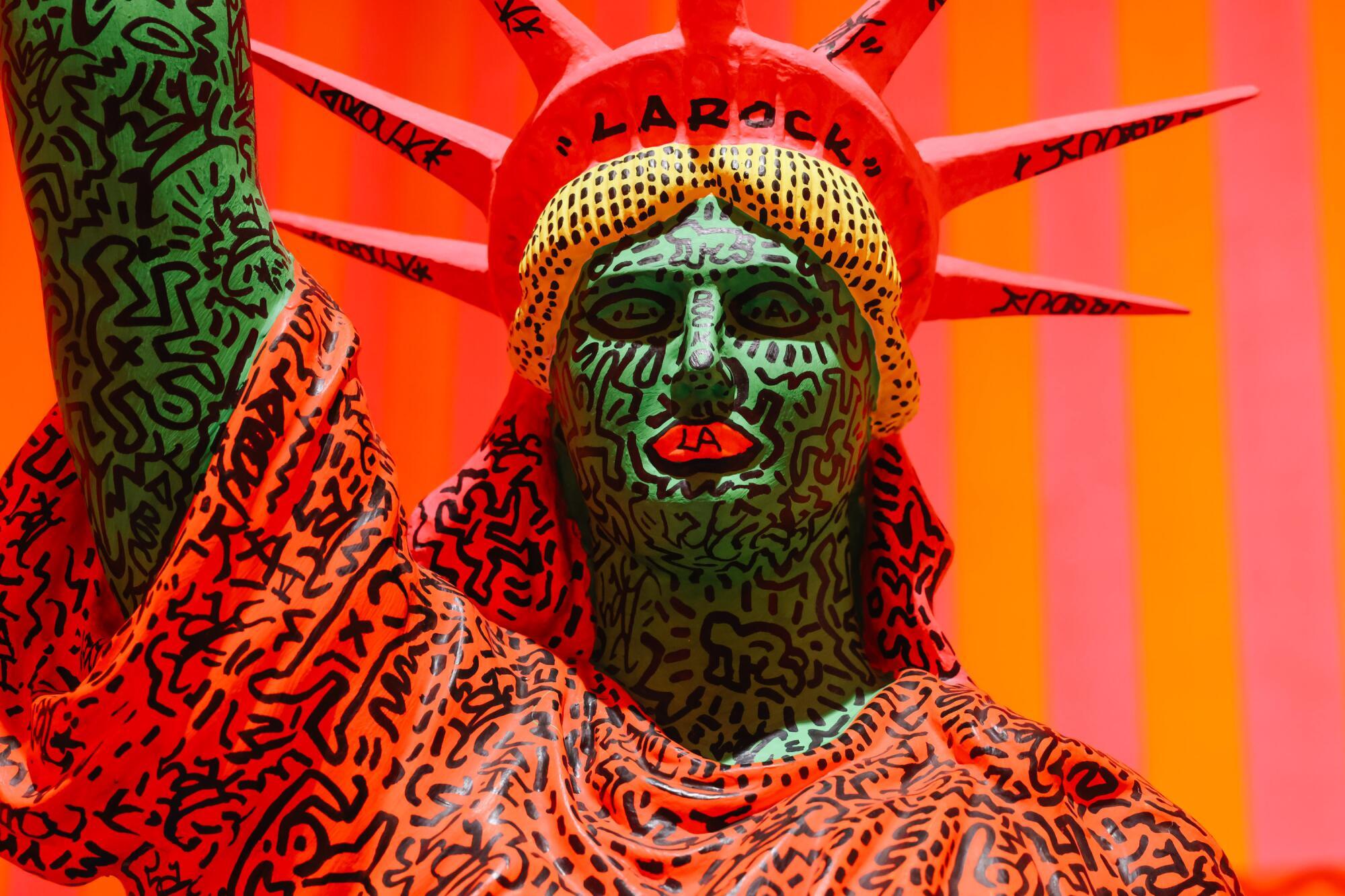
In an era where the reverberations of capitalism are felt in every corner of society, cultural icons like Grace Jones and Lauryn Hill surface as personifications of the system's complexities and contradictions. Their influence transcends mere entertainment, offering a mirror to the ever-evolving narrative of late capitalism—and its discontents.
Grace Jones: The Visage of Fluid Capitalism
Grace Jones, an enigmatic figure in the entertainment industry, harnesses the inherent fluidity of capitalism, reshaping it with her unique brand. Her artistry and androgynous persona challenge the rigid constructs of identity and consumer culture, often distorting what is accepted to make bold statements about freedom and self-expression. This flexibility aligns with the chameleon-like nature of late capitalism, where adaptation and change are constants.
Contorting the Norm: A Symbolic Gesture
With Jones's transformative power comes a symbolic contortion of societal norms. She adeptly bends expectations, playing with aesthetics and roles in a way that critically reflects the shape-shifting character of the current economic system. Her unapologetic approach serves as a microcosm of how individuals might navigate and manipulate the confines of a system that itself is ever-changing.
Lauryn Hill: The Relentless Voice of Consciousness

On the opposite end of the spectrum, Ms. Lauryn Hill embodies the persistent voice of introspection and critique in capitalist society. Hill's lyrics and activism reveal the undercurrents of resistance against a system that often marginalizes and silences.
Lauryn Hill's Lyrical Confrontation
Through her music, Lauryn Hill challenges audiences to confront uncomfortable truths about society, class, and race, revealing the residual anger and disaffection that the sheen of capitalism frequently overlooks. Her narrative is not one of blind disdain but a call to consciousness, urging a remembrance and awareness of what lies beneath the gloss—the human cost.
Harmonizing Contrasts: The Duality of Modern Icons
The juxtaposition of Grace Jones and Lauryn Hill paints a vivid portrait of the spectrum of experience within capitalist frameworks. While Jones seems to dance along with its fluid rhythm, Hill stands as a steadfast reminder of the fractures and fissures within. Together, their legacies form a harmonic duality, a balance of embracing and challenging the world they navigate.
The Alter-Ego of Late Capitalism

Hill's voice is like the echo of an alter-ego that late capitalism desperately tries to hush but never fully silences. Her persistence is emblematic of the lingering spirit of resistance that questions, provokes, and ultimately shapes the discourse of progress and equity within a capitalist society.
Traveling Through the Soundscapes of Resistance
In the same vein that Grace Jones and Lauryn Hill traverse the realms of cultural influence, individuals find their own paths through the physical and ideological landscapes of their environments.
Embarking on Journeys of Reflection and Challenge
Travel often becomes a metaphor for this journey—a tangible act of moving through spaces that reflect the complexities and contradictions endemic to late capitalism. Whether exploring urban jungles or remote havens, travelers engage with diverse narratives, much like how audiences unpack the messages within the music of Jones and Hill. Such journeys can prompt contemplation about one's place in a globalized society, stirring the conscience and fueling the soul's hunger for a deeper understanding and connection to the world.